A standard jobsite unit measures about 44 inches square and 90 inches tall, holds a 60-gallon waste tank, and serves roughly 10 workers on a 40-hour week between weekly service visits. OSHA sanitation guidance (29 CFR…
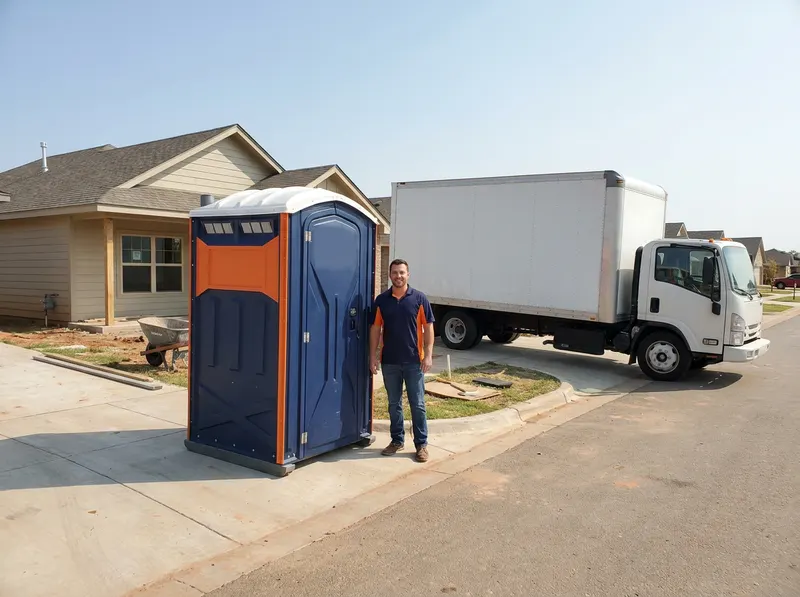
A standard jobsite unit measures about 44 inches square and 90 inches tall, holds a 60-gallon waste tank, and serves roughly 10 workers on a 40-hour week between weekly service visits. OSHA sanitation guidance (29 CFR 1926.51) sets one toilet for up to 20 workers on a construction site, and a second unit once the crew passes 20, a framing crew of 25 on a Nichols Hills custom home therefore needs two standard units, not one. Crews larger than that scale by adding units, and a hand-wash station or a flushing deluxe unit can ride alongside the standard toilet for inspection-day and client walk-throughs.
Decision-fit comes down to crew size, ground, and service road. A single standard unit fits a small remodel or a two- to three-person trade crew in Mesta Park or Crown Heights, where lots are tight and the driveway is the only place a service truck can reach. A larger pour or a multi-story build near Midtown or Deep Deuce runs several standard units clustered near the trailer, with the trade-off being footprint versus walking distance, units set close to the work keep the crew on task but must sit where the 20,000-pound vacuum truck can pull within about 25 feet of the tank to service it. On soft or graded sites, set units on a plywood pad or gravel so they stay level and the door swings clear.
Oklahoma weather drives the service schedule. Red-dirt sites near Capitol Hill and Gatewood turn to mud after a spring storm, and summer highs above 100°F speed odor and use of deodorizer, which is why weekly service is the default on active jobs rather than every other week. Winter freezes on sites near Lake Hefner and Quail Creek can slow the tank, so a blue biocide charge added at each visit keeps the unit usable down to freezing. For a full metro build, our team maps delivery routes off I-40 and I-235 so units land before the first crew arrives.
The how-it-works sequence is short. First, call or text the site address, expected crew size, and rental length. Second, we confirm placement and truck access, then set the unit the next business day in most of Oklahoma County. Third, a driver services the unit on the same weekday each week for the life of the job. Fourth, we pull the unit within one to two business days of your end-of-job call. A dumpster or waste bin is a separate service, a portable toilet rental covers only sanitation, not construction debris.
Every job gets a firm, written price after a free on-site visit.
Tell us about your construction site portable toilet rental job in Oklahoma City and we'll send a clear, written quote, usually the same day.
 Bricktown Portable Toilet Rental